
Website Conversion Optimization for Small Business: 10 Proven Ways to Get More Leads in 2026
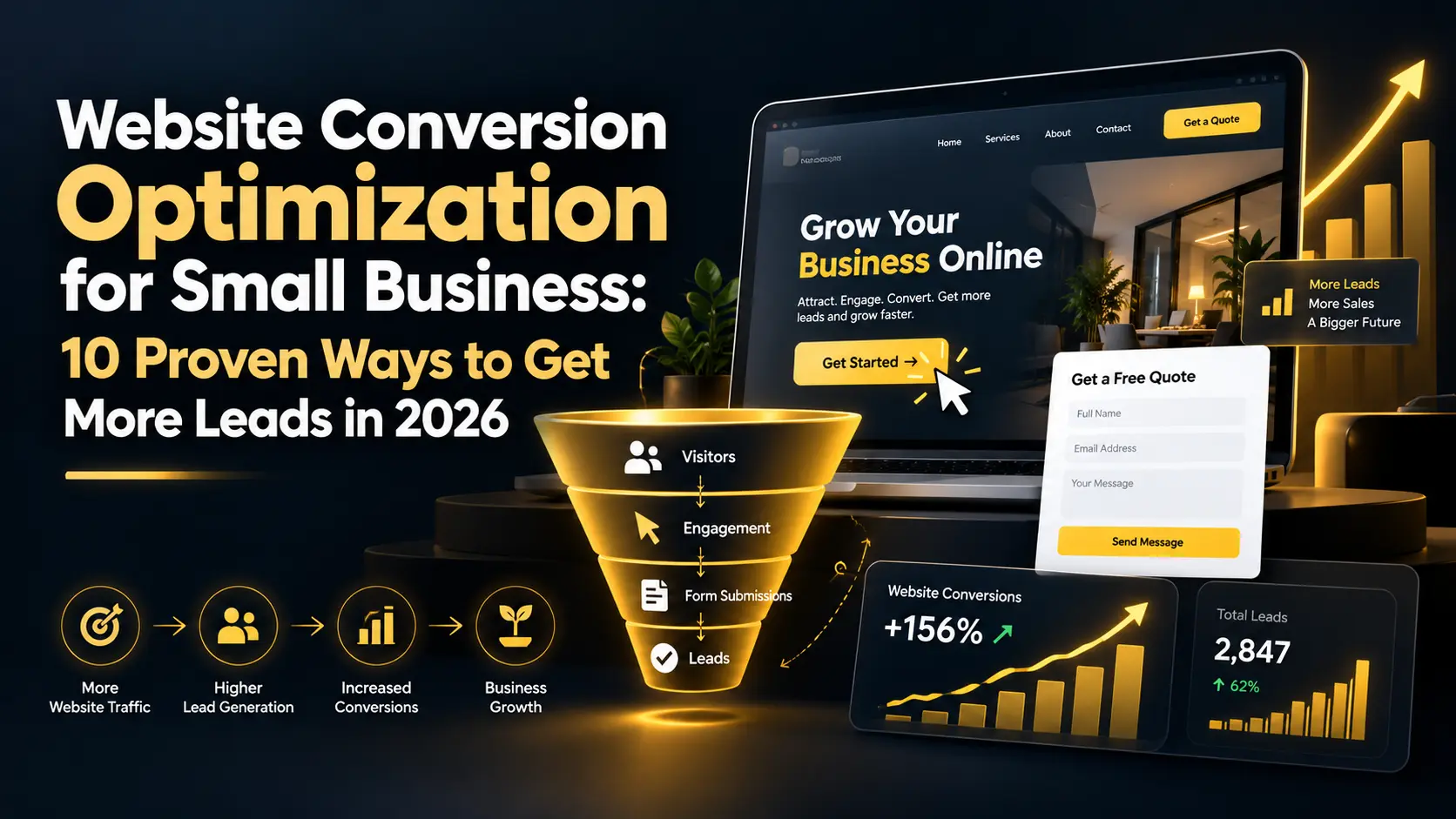
Website conversion optimization for small business is the process of improving a website so more visitors take a useful action, such as requesting a quote, booking a call, making a purchase, joining an email list, or contacting the business.
More traffic is useful, but traffic alone does not guarantee more customers. A website also needs clear messaging, trust, speed, usability, and strong calls to action.
What Is Website Conversion Optimization?
Website conversion optimization for small business looks at how visitors move through a website and removes friction that makes the next step confusing or difficult.
The goal is not to pressure visitors. It is to make the value of the business easier to understand and the desired action easier to complete.
10 Proven Website Conversion Optimization Ideas for Small Business
1. Make the Main Offer Clear Above the Fold
A visitor should quickly understand what the business does, who it helps, and what action to take next. Avoid vague headlines that sound impressive but do not explain the service.
2. Use One Primary Call to Action
Too many competing buttons can create indecision. Choose one primary action for each page, such as “Request a Quote,” “Book a Demo,” or “Start Free.”
3. Improve Page Speed
Slow pages create friction before visitors even read the offer. Compress images, remove unnecessary scripts, use caching, and choose reliable hosting.
Google’s Core Web Vitals guidance explains important user-experience metrics related to loading, responsiveness, and visual stability.
4. Reduce Form Friction
Ask only for information needed at that stage. A first-contact form may need only name, email or phone, and a short message. Long forms can be saved for later when the visitor is more committed.
5. Add Trust Signals
Testimonials, case studies, client logos, clear contact information, guarantees where appropriate, security information, and transparent policies can reduce uncertainty.
6. Improve Mobile Experience
Buttons should be easy to tap, forms should fit the screen, text should be readable, and important information should not depend on hover effects.
7. Match Landing Pages to Search Intent
If someone searches for “custom software development,” the landing page should focus on that service instead of sending them to a generic homepage.
This also supports SEO because content becomes more relevant to the query. See our guide to improving website SEO for broader search-visibility recommendations.
8. Answer Objections Before the CTA
Visitors may hesitate because of price, timing, trust, complexity, or uncertainty about what happens next. Address the most common objections near the conversion point.
9. Use Clear Service Pages
Each major service should have its own page with benefits, process, examples, FAQs, and a relevant call to action.
For businesses building or improving their site, a structured web development process can make both SEO and conversion tracking easier.
10. Test One Change at a Time
Change one important element, such as headline, CTA wording, form length, or pricing presentation, and compare results. Testing too many changes at once makes it difficult to understand what caused improvement.
Conversion Optimization Starts With the Right Goal
Different pages should have different conversion goals.
| Page | Possible Primary Goal |
|---|---|
| Homepage | Visit a service page or contact the business |
| Service page | Request a quote or book a call |
| Blog post | Read related content or join an email list |
| Product page | Purchase or start a trial |
| Landing page | Complete one focused action |
How to Find Conversion Problems
Look for pages that receive traffic but produce few useful actions. Then review headline clarity, page speed, mobile usability, CTA visibility, form length, trust signals, pricing clarity, and message match between traffic source and landing page.
SEO and Conversion Optimization Work Together
SEO helps the right people find a page, while website conversion optimization for small business helps those visitors understand the offer and take the next step.
A page that ranks but does not convert wastes opportunity. Strong website conversion optimization for small business helps turn qualified traffic into useful actions, while a page that converts well but receives no qualified traffic has the opposite problem.
Common Conversion Mistakes
Using Generic Headlines
Visitors should not need to guess what the business actually offers.
Too Many CTAs
Multiple competing actions can weaken the main goal.
Ignoring Mobile
A desktop-only design can lose users on smaller screens.
Changing Everything at Once
Small controlled tests make it easier to learn what works.
A Simple 7-Day Optimization Plan
- Choose the page with the most commercial value.
- Define one primary conversion goal.
- Rewrite the headline for clarity.
- Improve the main CTA.
- Shorten the form.
- Improve speed and mobile usability.
- Measure results before making the next change.
How Zynova Agency Approaches Conversion-Focused Websites
Zynova Agency builds websites, landing pages, SEO systems, automation, and custom software with business goals in mind. A good website should not only look professional; it should help the visitor understand what to do next.
Final Thoughts
Website conversion optimization for small business is about clarity, trust, speed, and reducing friction. Start with the most important page, choose one conversion goal, improve the experience, and measure changes instead of relying on assumptions.
Frequently Asked Questions
What is website conversion optimization?
It is the process of improving a website so a higher percentage of visitors complete a useful action such as contacting the business, booking, buying, or signing up.
What should a small business optimize first?
Start with high-value pages that already receive traffic, then improve headline clarity, CTA visibility, speed, forms, and trust signals.
Does conversion optimization help SEO?
They are different disciplines, but strong usability, useful content, fast pages, and clear structure can support both search performance and conversions.